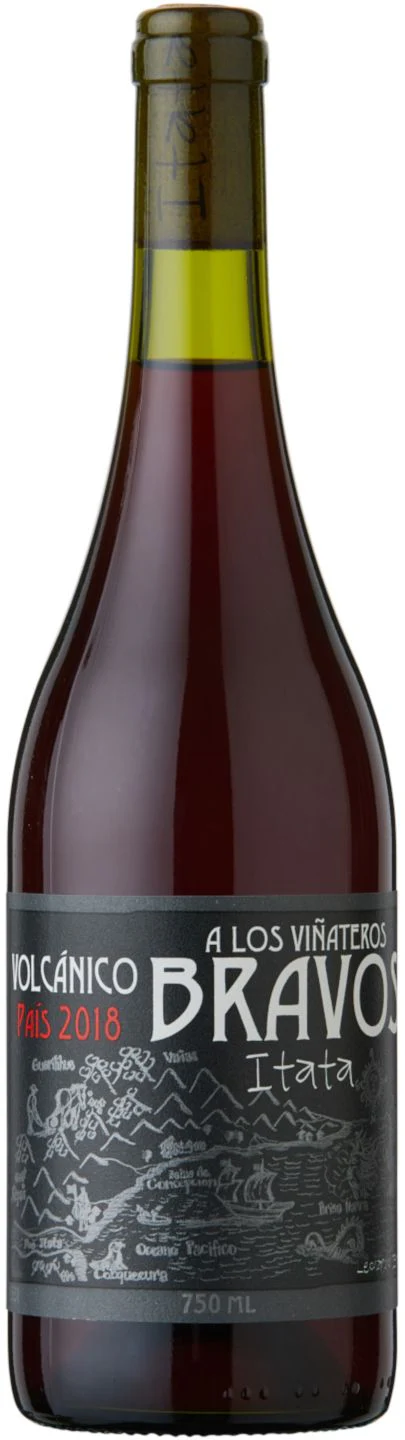
A Los Vinateros Bravos 'Volcanico' Pais
Made from very old vines (100+ years) grown on volcanic soil. The delicate underbrush aromas of Itata's wild grass, red fruits and a little bit of cassis are aromas and flavours that characterize this wine. A fresh wine, delicate, marked by fine grain tannins that give a very unique structure and create a long lingering finish with a distinctive mineral character due to the volcanic soils
where the old vines thrive.
Itata lies south (way south) of Chile’s higher-profile wine regions like Maipo and
Casablanca. Its capital, the port city of Concepción, is the point of the original Spanish colonization. The first grape variety here, called Pais - also known as the Mission Grape - was brought by the conquistadors in the 1550s. Widely scattered vine plantings soon spread across the rolling hills north of the capitol, blessed by a cool climate tempered by the Pacific Humboldt current, generous winter rainfall, and granitic loam and clay soil that retained water through dry periods. Grape vines, grown as small bushes, dry farmed without irrigation and worked traditionally with axes and horse plows thrived in these conditions on small family farms that provided wine for local consumption.
Original: $23.69
-65%$23.69
$8.29Product Information
Product Information
Shipping & Returns
Shipping & Returns
Description
Made from very old vines (100+ years) grown on volcanic soil. The delicate underbrush aromas of Itata's wild grass, red fruits and a little bit of cassis are aromas and flavours that characterize this wine. A fresh wine, delicate, marked by fine grain tannins that give a very unique structure and create a long lingering finish with a distinctive mineral character due to the volcanic soils
where the old vines thrive.
Itata lies south (way south) of Chile’s higher-profile wine regions like Maipo and
Casablanca. Its capital, the port city of Concepción, is the point of the original Spanish colonization. The first grape variety here, called Pais - also known as the Mission Grape - was brought by the conquistadors in the 1550s. Widely scattered vine plantings soon spread across the rolling hills north of the capitol, blessed by a cool climate tempered by the Pacific Humboldt current, generous winter rainfall, and granitic loam and clay soil that retained water through dry periods. Grape vines, grown as small bushes, dry farmed without irrigation and worked traditionally with axes and horse plows thrived in these conditions on small family farms that provided wine for local consumption.